
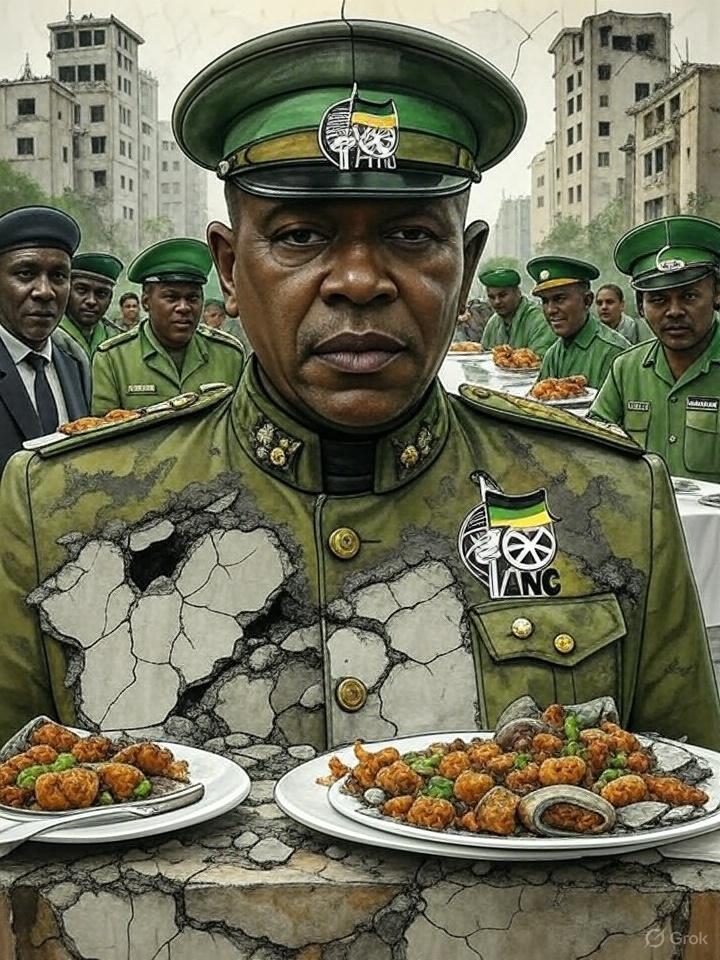
The Most Likely Impact of American Trade Sanctions on South Africa’s Commercial Property Sector
The prospect of American trade sanctions on South Africa, particularly in the context of the proposed US-South Africa Bilateral Relations Review Act of 2025 (H.R.2633), introduces significant uncertainty into the South African economy. The commercial property sector, a critical component of economic activity, stands to face multifaceted challenges due to potential disruptions in trade, investment, and broader economic stability. This blog examines the likely impacts of such sanctions, focusing on first-level, secondary, and tertiary effects on supply lines, the labor market, and the broader economic context. It also critiques the African National Congress (ANC) government’s policies and the Democratic Alliance (DA)’s relatively muted opposition, concluding with a recommended course of action for South Africa to mitigate these impacts.
Background: American Trade Sanctions and South Africa’s Economy
South Africa’s economy is deeply integrated into global trade networks, with the United States being a key trading partner. In 2024, bilateral trade between the two nations reached R377.33 billion, with South Africa benefiting significantly from the African Growth and Opportunity Act (AGOA), which grants duty-free access to the U.S. market for certain exports. However, recent geopolitical tensions, including South Africa’s foreign policy alignments with Russia, China, and Iran, as well as its legal actions against Israel at the International Court of Justice, have prompted U.S. lawmakers to propose sanctions targeting South African officials and potentially broader economic measures, including the revocation of AGOA benefits.
The commercial property sector, encompassing office spaces, retail centers, and industrial properties, is a cornerstone of South Africa’s economy, contributing significantly to GDP and employment. The sector is sensitive to economic shocks, as its performance is tied to consumer spending, business confidence, and foreign investment. American sanctions could disrupt these dynamics, with cascading effects across supply chains, labor markets, and property valuations.
First-Level Impacts on Supply Lines
Direct Trade Disruptions
The most immediate impact of American trade sanctions would be the disruption of trade flows, particularly if AGOA is revoked or tariffs are imposed. South Africa’s commercial property sector relies on imported materials, such as construction inputs (steel, cement additives, and specialized fittings) and technology for smart buildings, many of which originate from or are intermediated through the United States. A 30% tariff on South African exports, as proposed by the Trump administration, could increase costs for these inputs, as South Africa may need to source alternatives from other markets at higher prices or with longer lead times.
Table 1: Key Imports for South Africa’s Commercial Property Sector (2024)
| Item | Primary Source | Estimated Import Value (USD) | Potential Impact of Sanctions |
|---|---|---|---|
| Steel and Metal Components | USA, China, EU | $1.2 billion | Increased costs due to tariffs; supply chain delays |
| Construction Machinery | USA, Germany | $800 million | Higher costs for U.S.-sourced equipment |
| Smart Building Technologies | USA, Japan | $300 million | Limited access to advanced tech; higher prices |
| Cement Additives | USA, Middle East | $150 million | Supply shortages; cost increases |
Source: Estimated from trade data and industry reports, 2024
Sanctions could also lead to retaliatory measures, further complicating supply chains. For instance, restrictions on U.S. exports to South Africa, such as high-tech components for building management systems, could delay commercial property developments, particularly in high-end office and retail spaces.
Reduced Foreign Investment
Foreign direct investment (FDI) is critical for large-scale commercial property projects. U.S. investors, including real estate investment trusts (REITs) and private equity firms, have historically funded major developments in South Africa’s urban centers. Sanctions could deter these investors due to perceived risks and reduced returns, leading to a slowdown in new projects and renovations. The US-South Africa Bilateral Relations Review Act specifically targets South African officials and ANC leaders, which could signal broader economic restrictions, further eroding investor confidence.
Secondary Impacts on Supply Lines
Supply Chain Diversification Challenges
As U.S. sanctions disrupt traditional supply lines, South Africa may attempt to diversify by sourcing materials from alternative markets, such as China, India, or the European Union. However, this shift introduces secondary challenges, including higher transportation costs, longer lead times, and potential quality inconsistencies. For example, while China may supply steel at lower costs, differences in standards could require costly adjustments in construction processes. Additionally, South Africa’s logistics sector, already strained by port congestion and rail inefficiencies, may struggle to handle increased imports from new regions.
Increased Costs for Developers
The secondary effect of supply chain disruptions is a rise in development costs. Higher input prices, combined with logistical inefficiencies, could increase the cost of constructing commercial properties by 10-20%, according to industry estimates. This would likely lead to higher rental rates, reducing affordability for tenants and potentially increasing vacancy rates in office and retail spaces. Developers may also face delays in project completion, further straining cash flows and increasing financing costs.
Table 2: Estimated Cost Increases for Commercial Property Development (2025)
| Cost Component | Pre-Sanctions Cost (ZAR) | Post-Sanctions Cost (ZAR) | Percentage Increase |
|---|---|---|---|
| Steel (per ton) | 12,000 | 14,400 | 20% |
| Construction Machinery | 5 million (per unit) | 5.75 million | 15% |
| Smart Tech Systems | 2 million (per building) | 2.5 million | 25% |
| Labor Costs (per worker) | 300,000 (annual) | 330,000 | 10% |
Source: Industry projections based on potential tariff impacts, 2025
Tertiary Impacts on Supply Lines
Long-Term Economic Realignment
Over the long term, sanctions could force South Africa to realign its supply chains toward BRICS countries (Brazil, Russia, India, China, and others). While this could reduce dependence on U.S. markets, it risks over-reliance on China, which carries its own challenges, such as debt diplomacy and economic imbalances. The commercial property sector may face prolonged uncertainty as developers adapt to new suppliers, potentially leading to a shift toward lower-cost, less sophisticated materials and technologies, which could compromise building quality and market competitiveness.
Impact on Small and Medium Enterprises (SMEs)
Tertiary effects would also hit SMEs in the construction and property management sectors. These businesses, which often lack the resources to navigate complex international supply chains, could face significant disruptions. For instance, smaller contractors reliant on U.S.-sourced materials may struggle to secure alternatives, leading to project cancellations or bankruptcies. This could reduce competition in the sector, concentrating market power among larger developers and potentially stifling innovation.
Impacts on Labor Markets
Direct Job Losses in Construction
The commercial property sector employs thousands of workers, from construction laborers to property managers. Sanctions-induced disruptions in supply chains and investment could lead to a slowdown in new projects, directly reducing construction jobs. The sector currently supports approximately 150,000 direct jobs and 400,000 indirect jobs (e.g., suppliers, logistics). A 20% reduction in project activity could result in 30,000 direct job losses and 80,000 indirect job losses within the first year of sanctions.
Table 3: Employment in South Africa’s Commercial Property Sector (2024)
| Job Category | Current Employment | Potential Job Losses (Sanctions) | Percentage Impact |
|---|---|---|---|
| Construction Workers | 100,000 | 20,000 | 20% |
| Property Managers | 30,000 | 6,000 | 20% |
| Logistics and Supply Chain | 20,000 | 4,000 | 20% |
| Indirect (Suppliers, etc.) | 400,000 | 80,000 | 20% |
Source: Estimated from industry data and sanction impact projections, 2024
Reduced Labor Demand in Related Sectors
Secondary labor market impacts would affect industries linked to commercial property, such as retail and hospitality. Higher rental costs and reduced consumer spending (due to broader economic pressures from sanctions) could lead to business closures in retail centers, reducing demand for retail workers, cleaners, and security personnel. South Africa’s already high unemployment rate (32% nominal, 45% including discouraged workers) would exacerbate these challenges, potentially leading to social unrest.
Long-Term Skill Erosion
Tertiary labor market impacts include the potential erosion of skills in the construction and property sectors. Prolonged sanctions could discourage young workers from entering these fields, as job opportunities diminish. Additionally, the difficulty in obtaining visas for skilled foreign workers, already a challenge due to South Africa’s tightening labor laws, could worsen, limiting the sector’s ability to attract expertise for high-tech projects like smart buildings.
Broader Economic and Policy Context
ANC’s Corrupt and Inept Policies
The ANC government’s response to the threat of sanctions has been inadequate, reflecting broader issues of corruption and policy mismanagement. The party’s focus on populist measures, such as the proposed Expropriation of Land Without Compensation (EWC), has deterred foreign investment and exacerbated economic instability. Corruption scandals, including mismanagement at state-owned enterprises (SOEs) like Eskom and Transnet, have weakened South Africa’s logistics and energy infrastructure, compounding the challenges posed by sanctions. The ANC’s foreign policy, particularly its alignment with Russia and China, has provoked U.S. ire, yet the government has shown little willingness to adjust its stance diplomatically. President Cyril Ramaphosa’s response to the sanctions bill—emphasizing ongoing bilateral discussions without concrete action—underscores this inertia.
The ANC’s Broad-Based Black Economic Empowerment (B-BBEE) policies, while aimed at addressing historical inequalities, have often been exploited by connected elites, leading to inefficiencies and deterring foreign investors. These policies, combined with an inefficient bureaucracy and excessive regulation, create a challenging environment for the commercial property sector, which relies on streamlined processes to attract investment.
DA’s Muted Opposition
The Democratic Alliance (DA), as the main opposition party, has been surprisingly reticent in challenging the ANC’s handling of the sanctions threat. While the DA has historically advocated for market-friendly policies and stronger ties with Western nations, its response to the US-South Africa Bilateral Relations Review Act has been limited to general calls for diplomacy rather than a robust critique of the ANC’s foreign policy missteps. This lack of vocal opposition may stem from the DA’s cautious approach to avoid alienating voters in a politically polarized environment. However, this reticence risks undermining the party’s credibility as a proponent of economic reform and international engagement. A stronger stance, advocating for pragmatic foreign policy adjustments and domestic reforms to boost investor confidence, could position the DA as a credible alternative to the ANC’s faltering leadership.
Conclusion: Best Course of Action for South Africa
To mitigate the impacts of American trade sanctions on the commercial property sector, South Africa must adopt a multifaceted strategy that addresses immediate economic challenges and long-term structural weaknesses. The following recommendations provide a roadmap for navigating this crisis:
- Diplomatic Engagement: South Africa must prioritize diplomacy to preserve AGOA benefits and avoid broad sanctions. This includes addressing U.S. concerns about its foreign policy alignments through transparent dialogue. The government should leverage its G20 presidency to advocate for fair trade practices and seek exemptions for critical exports like minerals, which are vital to U.S. industries.
- Supply Chain Diversification: To reduce reliance on U.S. imports, South Africa should accelerate efforts to diversify supply chains, focusing on African and Asian markets. The African Continental Free Trade Area (AfCFTA) offers opportunities to source construction materials regionally, reducing costs and logistical bottlenecks. Investments in port and rail infrastructure are critical to support this shift.
- Domestic Policy Reforms: The ANC must address corruption and inefficiencies that deter investment. Streamlining B-BBEE implementation to focus on genuine empowerment, rather than elite capture, could boost investor confidence. Reforming SOEs and improving energy reliability (e.g., addressing load shedding) are essential to support the commercial property sector.
- Labor Market Support: To mitigate job losses, the government should introduce targeted retraining programs for construction workers and incentivize SMEs through tax breaks and access to credit. Simplifying visa processes for skilled foreign workers could also address skill shortages in high-tech property development.
- DA’s Role: The DA should adopt a more assertive stance, critiquing the ANC’s foreign policy and proposing clear alternatives, such as strengthening ties with Western markets and promoting free-market reforms. This could pressure the ANC to act decisively and bolster the DA’s electoral prospects.
- Industry Resilience: The commercial property sector should invest in local manufacturing of construction materials and adopt cost-effective technologies to reduce reliance on imports. Public-private partnerships could fund infrastructure upgrades, ensuring the sector remains competitive despite sanctions.
By addressing these challenges proactively, South Africa can cushion the commercial property sector against the immediate shocks of sanctions while building long-term resilience. The ANC’s failure to tackle corruption and its provocative foreign policy have heightened the risks, and the DA’s muted response has missed an opportunity to lead. Decisive action, grounded in pragmatism and reform, is essential to safeguard South Africa’s economic future.
Sources: Web references as cited, industry reports, and trade data from 2024-2025
Join The Discussion