
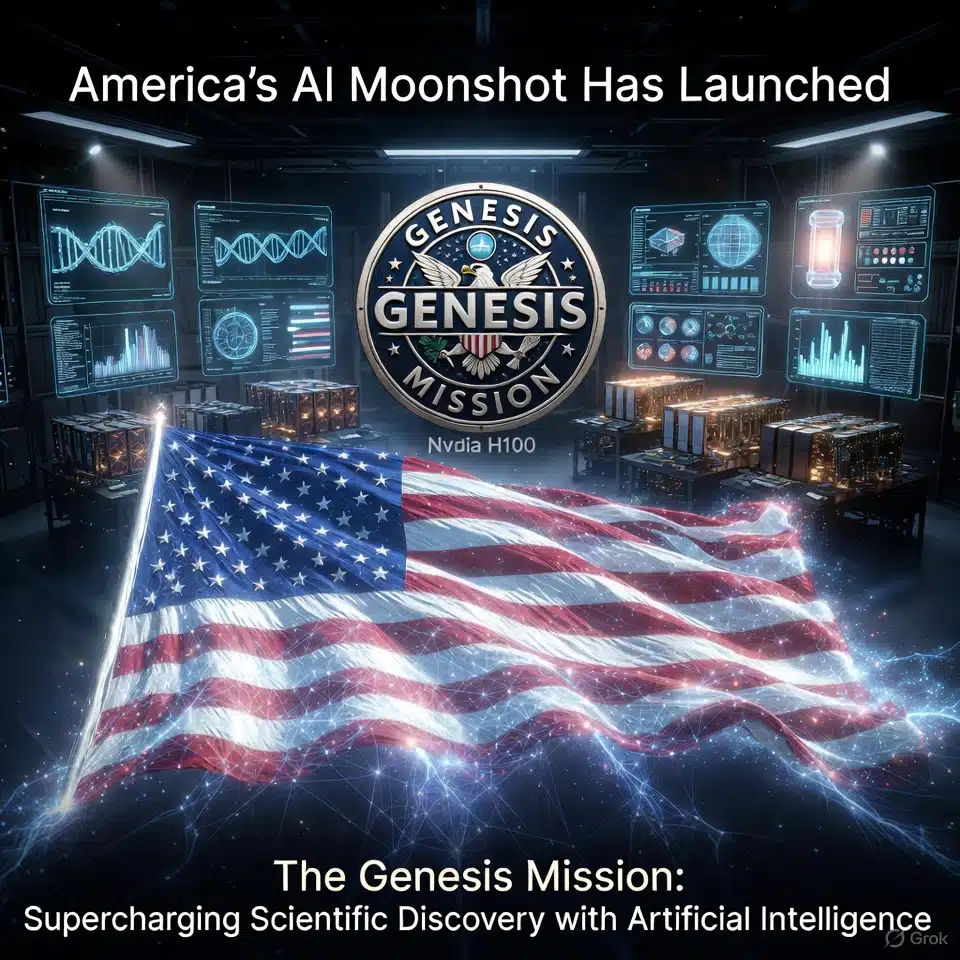
Trump’s Genesis Mission: Revolutionizing AI-Driven Scientific Discovery in America
In a bold move that’s set to redefine the future of innovation, President Donald Trump has signed an executive order launching the Genesis Mission – a groundbreaking federal initiative designed to supercharge artificial intelligence in scientific research. Announced on November 24, 2025, this ambitious program promises to harness AI’s full potential to tackle some of our biggest challenges, from healthcare breakthroughs to energy efficiency. If you’re wondering how Trump’s AI executive order on scientific discovery could impact everything from your doctor’s office to your utility bill, you’re in the right place. Let’s break it down in simple terms.
In this era of technological advancements, Trump’s Genesis Mission is at the forefront, driving innovations that have the potential to change our daily lives.
The Genesis Mission aims to integrate AI solutions across various sectors, ensuring that Trump’s Genesis Mission becomes a pivotal part of the future.
Understanding the implications of Trump’s Genesis Mission will help us appreciate its transformative impact on research and development.
What Is the Genesis Mission? A Quick Overview
With the launch of Trump’s Genesis Mission, the scientific community is poised for a new era of exploration and discovery.
Understanding the Impact of Trump’s Genesis Mission
The collaboration between government and industry under Trump’s Genesis Mission is expected to yield significant advancements.
The synergy created by Trump’s Genesis Mission will facilitate unprecedented access to data and resources.
At its core, the Genesis Mission AI initiative is about coordination and acceleration. Picture this: Government agencies, often siloed in their efforts, now pooling massive datasets and supercomputing power to let AI do the heavy lifting in research. Led by Michael Kratsios, Director of the White House Office of Science and Technology Policy, the mission draws on the Department of Energy’s 17 national labs – think world-class facilities like Oak Ridge and Lawrence Livermore – to create an integrated AI platform.
Through Trump’s Genesis Mission, we can expect a surge in problem-solving capabilities across multiple domains.
This isn’t just tech jargon; it’s a practical push to accelerate scientific discoveries using AI in federal labs. Kratsios likened it to the Apollo program, calling it “the largest marshaling of federal scientific resources” since we put humans on the moon. The goal? Turn years-long experiments into days or even hours of insight by automating designs, running simulations, and predicting outcomes in fields like protein folding and fusion energy dynamics.
Key Players and Partnerships Fueling the Fire
No moonshot happens in isolation, and the Genesis Mission is teaming up with heavy hitters from the private sector. Companies like Nvidia Corp., Dell Technologies Inc., Hewlett Packard Enterprise (HPE), and Advanced Micro Devices (AMD) are already on board, bringing their cutting-edge supercomputing tech to the table. These partnerships build on recent announcements where these firms committed to expanding AI infrastructure within national labs, creating a hybrid ecosystem of public data and private innovation.
In the energy sector, Trump’s Genesis Mission aims to revolutionise how we approach sustainability and efficiency.
The comprehensive approach of Trump’s Genesis Mission will enhance our capacity to tackle global challenges.
Why does this matter for AI supercomputing partnerships in US government research? It means faster access to tools that can crunch petabytes of data, making discoveries more accessible and scalable. Universities and other agencies will plug in too, creating a collaborative network that’s open to bold ideas from scientists everywhere.
By promoting Trump’s Genesis Mission, the administration aims to solidify the U.S.’s position as a leader in AI.
As the outcomes of Trump’s Genesis Mission unfold, its implications on national security and economic growth will become clearer.
Real-World Wins: From Health to Energy and Beyond
Ultimately, the success of Trump’s Genesis Mission may redefine our understanding of technological progress.
Join the conversation on how Trump’s Genesis Mission could reshape the future.
The mission’s focus areas are laser-targeted on problems that affect us all. Here’s how it’s poised to deliver:
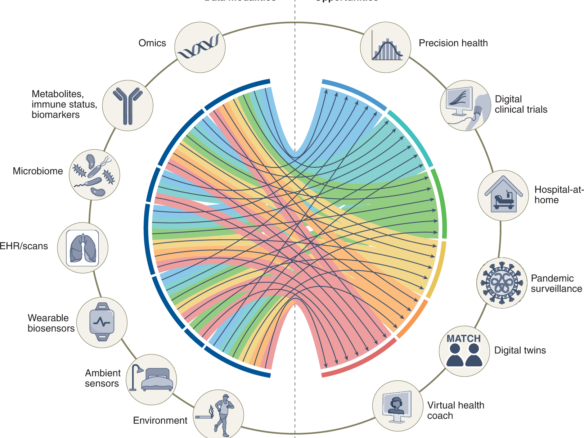
- Health Sciences: Imagine AI sifting through vast troves of medical data to speed up drug discovery or model disease progression. This could lead to faster cures for everything from cancer to rare genetic disorders, building on Trump’s earlier Childhood Cancer Data Initiative.
- Materials Engineering: AI will help design stronger, lighter materials for everything from electric vehicles to aerospace, boosting American manufacturing without the trial-and-error grind.
- Energy Sector: In a time of rising costs, the initiative eyes reducing energy costs through AI innovations in the US electric grid. Energy Secretary Chris Wright emphasized that one ultimate goal is to “bring more energy online, make our electricity grid more efficient, and reverse price rises.” By optimizing data centers – those power-hungry beasts behind AI’s growth – and streamlining grid operations, the Genesis Mission could plateau and even lower electricity prices, easing the strain on households and businesses.
Officials project these efforts will not only spark breakthroughs but also ramp up production, cut costs, and address voter priorities like affordability. As Kratsios put it, “With the power of AI, America is on the brink of a scientific revolution.”
The Bigger Picture: Trump’s Vision for AI Leadership
This isn’t a standalone play. Trump has made US AI dominance against China a cornerstone of his agenda, issuing multiple executive orders to ease regulations on data centers, secure hardware supply chains, and block patchwork state-level rules. A forthcoming order would even empower the Department of Justice to challenge unconstitutional state AI regs, pushing for a unified federal standard.
By framing the Genesis Mission as akin to the Manhattan Project or space race, the administration signals urgency: AI isn’t just a tool; it’s a national security imperative. It ties into broader policies like America’s AI Action Plan, which outlines nearly 100 actions to fuel innovation while prioritizing ethical, secure development.
Why This Matters for You – And the Road Ahead
For everyday folks, the impact of Trump’s Genesis Mission on everyday energy costs and health innovations could be transformative. Lower bills? Quicker medical advances? Stronger economy? It’s all on the table. But challenges remain, like funding (Congress may need to step up) and ensuring equitable access to these gains.
As we watch this unfold, one thing’s clear: The Genesis Mission is planting seeds for a smarter, more efficient America. What do you think – will AI finally crack the code on fusion energy or affordable clean power? Drop your thoughts in the comments below!
Sources: White House Fact Sheet, CBS News, The New York Times, and Bloomberg. Stay tuned for updates on this evolving story.
Share this if you’re excited about AI’s role in solving real problems! #GenesisMission #TrumpAI #ScientificDiscovery #AIFuture #EnergyInnovation
Join The Discussion