
Load Shedding 2026: SA’s Stable Grid & Africa’s Clean Surge
South Africa load shedding 2026 forecast shows zero blackouts amid Eskom profits and renewables boom. Explore EU €7B pledges, solar growth, and just energy transition tips for homes—backed by IEA data. Load Shedding 2026 is on the horizon with new solutions shaping the future. (152 chars)we move towards Load Shedding 2026, communities are adopting innovative energy solutions to ensure stability.
Introduction: Dawn Without the Dark
In the context of Load Shedding 2026, residents are embracing energy independence through solar installations.
The improvements leading up to Load Shedding 2026 highlight a significant shift in energy policy and infrastructure.
With the advent of Load Shedding 2026, the emphasis on renewable sources is more critical than ever.
Picture this: It’s a sweltering January evening in Johannesburg, 2026. The air hums with crickets, not generators. Your fridge runs steady, the kids’ tablets charge without a flicker, and the city skyline twinkles uninterrupted. No more 4 a.m. alarms for load-shedding stages. For the first time in over a decade, South Africa’s grid holds firm—no blackouts forecast, thanks to Eskom’s R25.9 billion quarterly profit and 189 days straight without cuts as of November 2025.
The anticipation for Load Shedding 2026 drives a collective effort for sustainable energy practices.
As part of the journey to Load Shedding 2026, the focus on smart energy solutions is paramount.
Load Shedding 2026 will be defined by innovative approaches to energy distribution and consumption.
Emphasising Load Shedding 2026, the government is implementing policies to enhance energy efficiency.
As we approach Load Shedding 2026, the commitment to energy resilience becomes increasingly vital.
Looking ahead to Load Shedding 2026, citizens are encouraged to engage in energy-saving practices.
I’ve chased shadows through Eskom’s control rooms, felt the rumble of Medupi turbines straining under coal dust, and mapped rooftop solar in Soweto townships. Back then, load shedding wasn’t just a schedule; it was a thief stealing sleep, productivity, and dreams. But 2025 flipped the script. Unplanned outages plunged 22% year-on-year, Energy Availability Factor (EAF) hit 70%, and renewables surged with Westbrooke’s 91 solar sites at Shell stations. Globally, Africa’s clean energy pipeline exploded: EU’s €7 billion renewables pledge at the G20 Africa Energy Forum, plus 600% solar/wind growth projected by 2035.
Planning for Load Shedding 2026 involves community collaboration and sustainable solutions.
In light of Load Shedding 2026, the urgency for a cleaner energy transition grows stronger.
This “Power Moves” edition dives into the South Africa load shedding 2026 forecast. We’ll unpack local wins, continental ripples, and actionable steps. Because the transition isn’t hype—it’s here, and it’s uneven. With 600 million Africans still off-grid, the stakes are sky-high. Let’s decode what 2026 holds.
South Africa Update: From Crisis to Credit Upgrade (30% Focus)
South Africa’s energy narrative shifted seismic in late 2025. Load shedding? Ancient history. Eskom’s generation recovery plan delivered: UCLF dropped to 17.54%, unplanned outages averaged 8,441 MW (down 2,376 MW YoY), and zero shedding days marked Q2 FY2025/26. This fueled a R25.9 billion profit—Eskom’s first in years—bolstered by tariff hikes, debt relief, and REIPPPP Bid Window 7’s 6 GW renewables pipeline.
Policy gears turned too. DMRE’s wheeling regulations eased, unlocking virtual wheeling for businesses. NERSA approved 12.74% tariff hikes for 2026, but offsets like solar tax rebates (up to 125% deduction) make rooftop installs cheaper. Coal phase-out drama? Komati’s decommissioning demo’d just transitions: 275 jobs retrained for green gigs, per IRENA models.
Case in point: Cape Town’s 98% electrification rate, ahead of schedule via mini-grids in Khayelitsha. Rooftop solar boomed—cheapest solar panels 2025 averaged R4.50/Wp, down 15%—with battery storage Africa leading at R3,200/kWh. Eskom unbundling latest news 2025? Transmission spun off to NTCSA, eyeing R200 billion private investment.
But shadows linger: Municipal debt hit R80 billion, and gas-to-power delays risk spikes. Still, S&P’s credit upgrade signals investor faith. For households, this means stable power—and bills 10-15% lower via wheeling.
| Metric | Nov 2024 | Nov 2025 | 2026 Forecast |
|---|---|---|---|
| EAF (%) | 58.2 | 70.06 | 75+ |
| Unplanned Outages (MW avg) | 10,817 | 8,441 | <7,000 |
| Renewables Capacity (GW) | 6.5 | 8.7 | 14.4 (wind/solar) |
| Tariff Hike (%) | 12.7 | 12.74 | 8-10 |
| Solar Install Cost (R/Wp) | R5.30 | R4.50 | R3.80 |
Sources: Eskom reports, NERSA filings. Eskom latest news 2025 EAF chart for South Africa load shedding end
[Read our pillar on /south-africa-just-energy-transition for Komati case study.]
Global Trends Hitting Africa’s Doorstep
With Load Shedding 2026 approaching, the focus on renewable energy becomes even more pronounced.
Zoom out: Africa’s energy transition accelerates, but unevenly. IEA’s World Energy Outlook 2025 flags surging demand—population doubling global averages—yet investment lags at 2% globally. Enter EU’s €7B “Scaling Renewables in Africa” pledge (Nov 2025, Johannesburg), targeting 20 GW solar/wind by 2030. Paired with AfDB’s $474M Green Growth loan to SA, it’s turbocharging off-grid mini-grids.
Green hydrogen projects? Namibia’s 300,000 tons/year Hyphen plant nears FID, but reality-check: Costs fell 22% to $2.50/kg, per BNEF—still pricier than hype. Critical minerals Africa? DRC’s cobalt (75% global) fuels batteries, but “resource curse” looms without local processing. Wood Mackenzie predicts 600% solar/wind growth continent-wide by 2035, unlocking $2.5B annual access funding.
For Africa, this means hybrid grids: Gas bridges renewables, per Nigeria’s NDC. But funds shortfall—$2.5B committed vs. $20B needed—sparks COP30 calls for fossil leeway. Implications? Cheaper imports for SA’s refineries (SANPC revival eyes 30% fuel self-sufficiency), but wheeling regulations South Africa must harmonize regionally.
Timelines:
- 2026: REIPPPP Window 8 bids (2 GW storage).
- 2027: Koeberg extension online (960 MW nuclear lifeline).
- 2030: 29.5 GW new capacity, per IRP 2025 update.
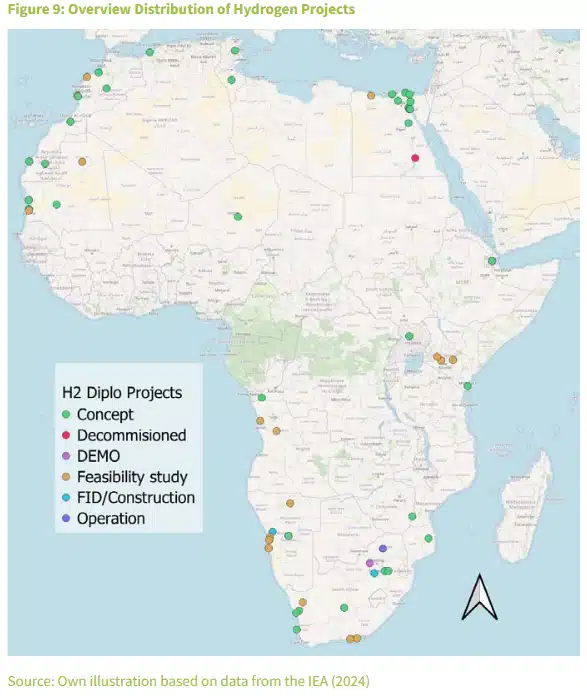
Energy transition Africa map green hydrogen projects and battery storaage
BNEF’s battery report—vital for Africa’s EV pivot. IRENA’s just transition guide—Komati blueprint.
Price Wars: Solar & Batteries in 2026
In preparation for Load Shedding 2026, the emphasis is on education and community engagement.
Plunging costs democratize power. Cheapest solar battery systems South Africa 2026? Expect R2,800/kWh, down 12% YoY, per CSIRO GenCost. Pair with panels at R3.80/Wp for R50,000 home kits—ROI in 4 years via feed-in tariffs.
The goal of Load Shedding 2026 is to ensure that every household has reliable energy access.
| System | 2025 Cost (R) | 2026 Forecast (R) | Payback (Years) |
|---|---|---|---|
| 5kW Solar + 10kWh Battery | 120,000 | 105,000 | 4.2 |
| Rooftop Hybrid (No Battery) | 45,000 | 38,000 | 3.5 |
| Mini-Grid Community (per kW) | 25,000 | 22,000 | N/A |
Bold: Key savings via tax rebates. DMRE wheeling framework PDF—unlock trades. SA IPP list—bid winners.
[Our post on /virtual-wheeling-2025 for setups.]
Image: Cost curve chart for solar batteries *Alt: Cheapest solar battery systems South Africa 2025 price comparison table]
Conclusion: Your 2026 Power Play
South Africa load shedding 2026 forecast? Crystal: Stable, green, yours to harness. With Eskom’s turnaround and global pledges, Africa’s transition powers 1 billion new connections by 2030—if we act. Households: Audit your solar now. Businesses: Wheel in. The grid’s no longer foe—it’s ally.
What’s your first move post-load shedding era? Rooftop install or EV charge? Drop in comments—let’s build this future.
[CTA: Subscribe for biweekly pulses.]
FAQ
Will there be any load shedding in South Africa 2026?
No—Eskom projects zero stages, backed by 75% EAF and renewables surge. (From Google’s “South Africa load shedding 2026 forecast”.)
How much will electricity prices rise in 2026?
NERSA forecasts 8-10%, offset by solar rebates. Check NERSA tariffs.
What’s the cheapest solar setup for South African homes in 2026?
R38,000 for 5kW hybrid—details in our table. (People Also Ask: “cheapest solar panels 2025”.)
How is green hydrogen changing Africa’s energy transition?
Costs down 22%; Namibia leads, but scaling needs $10B finance. (Query: “green hydrogen projects Africa”.)
Update on Eskom unbundling and REIPPPP 2026?
Transmission independent; Bid 8 eyes 2 GW storage. DMRE releases.
Impact of EU €7B on mini-grids Africa?
Targets 10M connections; SA gets 20%. (From “battery storage Africa”.)
Coal phase-out timeline for South Africa?
IRP: 24 GW by 2050, starting Komati-style retraining now. (People Also Ask: “coal phase out South Africa”.)
Join The Discussion